
What Remains When Caregiving Ends
When my father died in 2021, I expected to grieve my dad. I did not expect to grieve myself.


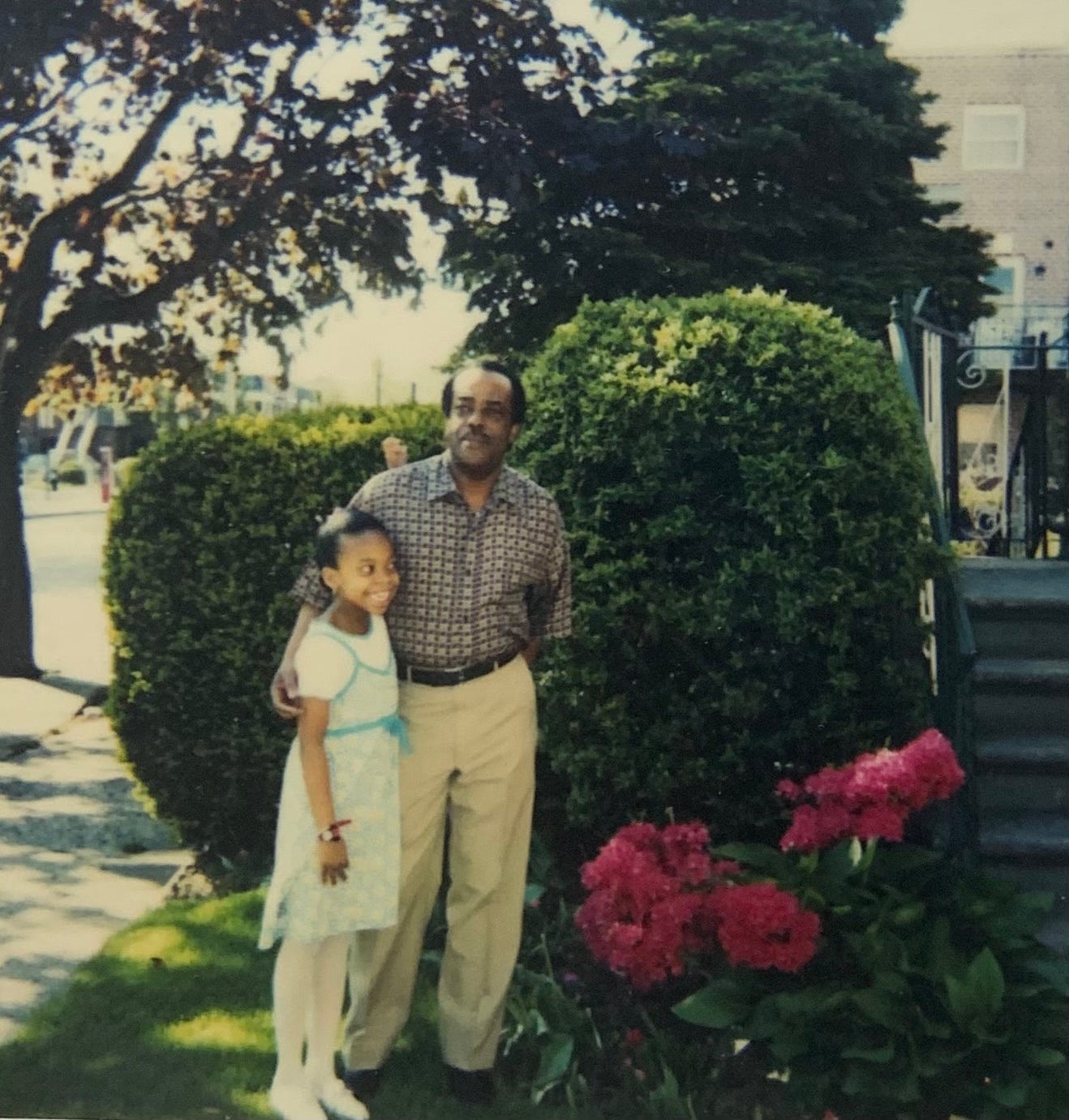
I was lying on the couch in my childhood home, and I felt a tap on my shoulder. It was my dad. Not audible and barely able to stand. He was losing his balance and mouthing words to me that I couldn’t initially comprehend. Finally, I made them out to be “Call your mother.” It was 1998—I was nine years old and terrified.
I didn’t understand what was happening, but I knew my dad needed me. In that moment, without language for it, I jumped into the only action that made sense: care. I needed to do exactly what I thought my dad was saying to get him whatever help he needed—that he couldn’t give himself.
I walked over to our landline phone in the kitchen, called my mom at work, and kept my eyes on my dad, who visibly appeared as afraid as I was.
Trembling, I said into the phone, “Mommy, Daddy can’t speak or walk.”
To this day, what happened after is still all a blur. The very next thing I remember is standing in the emergency room with my family, desperately wanting to see my dad, but not allowed to go in because I was too young. The doctors eventually declared that my dad had a major stroke. I had no idea how that diagnosis would end up shaping my identity.
God blessed my dad to live twenty-three more years after that barely audible “call your mother.” However, he—and truly, all of us—spent years dealing with a series of strokes, a major car accident, hospital stays, emergency health scares, and the development of dementia.
I navigated my formative and teen years with my dad’s physicality, which proved a bit different than the other fathers I grew up observing. His very noticeable, permanent limp and his ever-present cane propelled me to care and fiercely defend that difference. My mom never placed pressure on me, but as someone who loved her parents and was forming a childlike understanding of Ephesians 6:2-3, a caregiver identity was taking shape before I really even knew myself.
caregiver
/ˈkerˌɡivər /
A caregiver is an individual who provides direct assistance and support to someone who is not fully independent.
By the time I arrived back home from college and was preparing to start graduate school in 2011, my dad’s health was becoming more of a challenge. By then, caregiving wasn’t something I stepped into, it was something I already knew how to be. My life quickly became shaped by supporting my mom with managing appointments, being on rotation for hospital and nursing home visits, providing bath assistance, feeding my dad, serving as his secondary health care proxy, and the like.
I was anticipating needs before they were even spoken. And because I wanted to preserve my dad’s humanity while his body was rapidly changing, because I wanted to support my mom so the weight wouldn’t fall totally on her…that care felt less like responsibility and more like recognition.
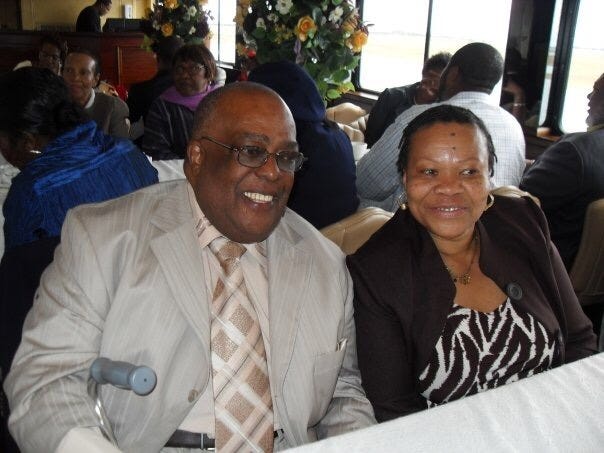
The constant surveillance of my parents’ needs did not feel like an obligation to me, but more like seeing them for who they were individually and meeting them with intentionality. Even if this meant I unconsciously diminished my own humanity, my own needs.
For years, while my dad was alive, I never questioned this unspoken weight I carried. Though it was heavy, it was a version of myself that I thought to be rooted in love, formed by necessity, and believed to be affirmed by my Christian faith. My childlike understanding of “honor your father and mother”1 had turned into a young adult carrying a solo pressure that I recognize now I should have vocalized more.
But on May 31, 2021, everything changed.
At 7:07 p.m., with It is Well playing in the background, my dad took his last breath as he lay in his hospital bed at our home.
I can still hear “whatever my lot thou hast taught me to say, it is well, it is well with my soul,” filling my parents’ bedroom.
I still see my mom rubbing her husband’s head in his last moments and affirming, “Yes, it is well.”
I can still vividly remember leaning over and telling my dad, “It’s okay. You can go,” and seeing one tear drop from my dad’s eye as life left his body.
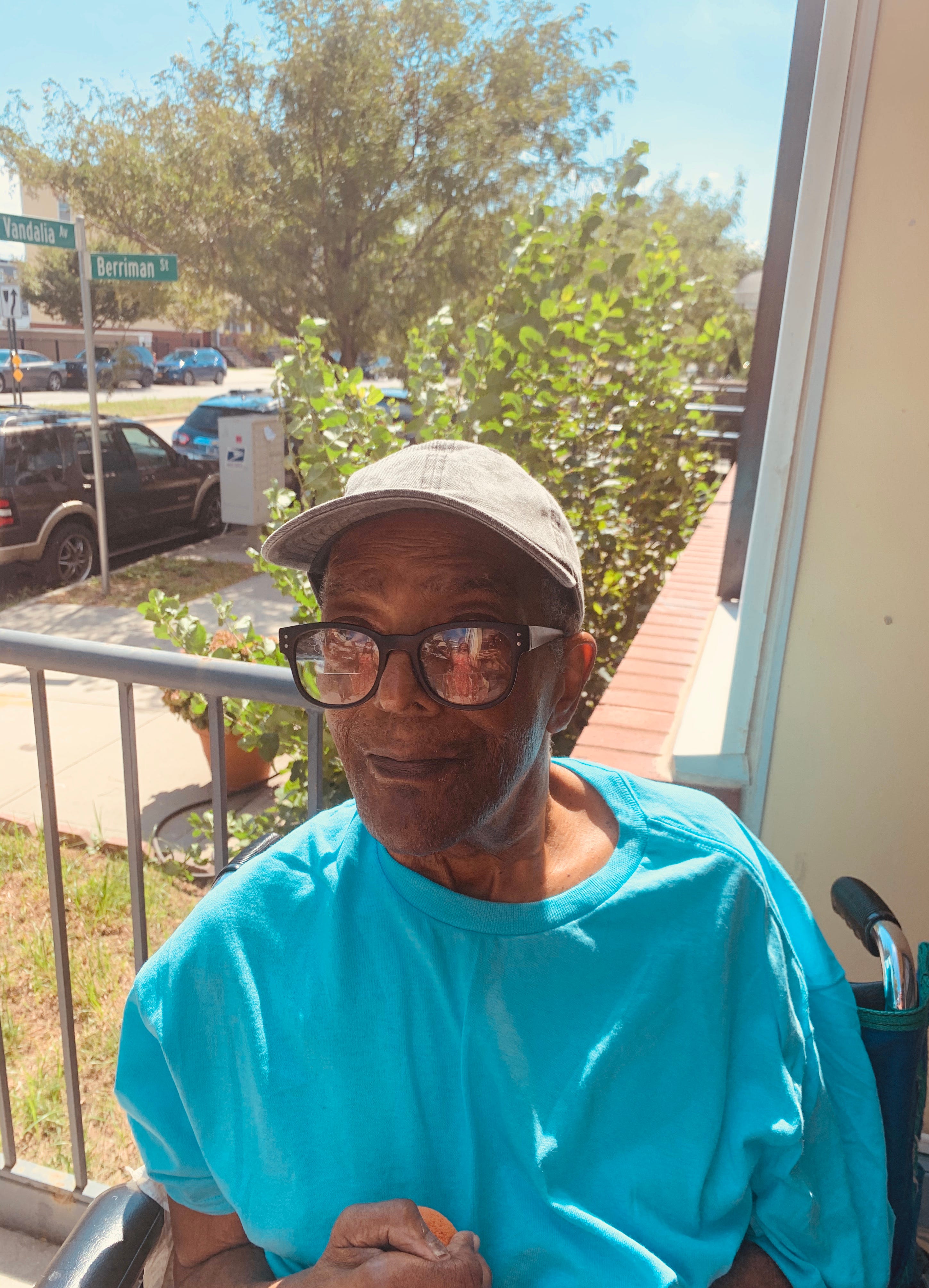
When I lost my father, I knew I would ride the waves of grief. What I didn’t know was how strong the waves would come as I navigated not one, but two losses: my father and the caregiver I had become out of necessity.
As I processed these losses, I quickly began to see the unsettling questions left in the wake of both the absence of my father and the absence of the identity that I had assumed all these years:
How many relationships did I show up as a caregiver—because that was all I knew from such a young age—when a sister, daughter, niece, cousin, or friend was needed instead?
How many relationships took advantage of this and inherently expected caregiving even when I was trying to pull back?
How many times did I push down my own humanity and needs to support someone else?
How many relationships lacked reciprocity when I needed care?
And the most critical one that was pressing against me often in my quiet time: What was God telling me to shed because He knew if I carried it into my next season, I would be destroyed—not pruned—by it?
At the end of last year, the answers to these questions became glaringly apparent.
God wasn’t asking me to stop loving people deeply, because this was a gift and calling He had given me. However, He was asking me to stop believing that this kind of love and care needed to cost me everything.
In Exodus 18:13-23, Moses is standing before the people all day and all night, petitioning to God on their behalf. But when his father-in-law, Jethro, witnessed what he was doing, he told Moses this would cost him.
See, Moses cared deeply for the people of Israel and was invested in them, but what he was doing at the time could not be sustained. It would have completely destroyed him. Moses was entering a new season and needed to find a different approach to standing before God for the people of Israel.
The truth is, I see myself in Moses as I read this Scripture. The care I offered my dad was born out of necessity because he could not physically do things for himself.
And if given the choice, I’d do it again.
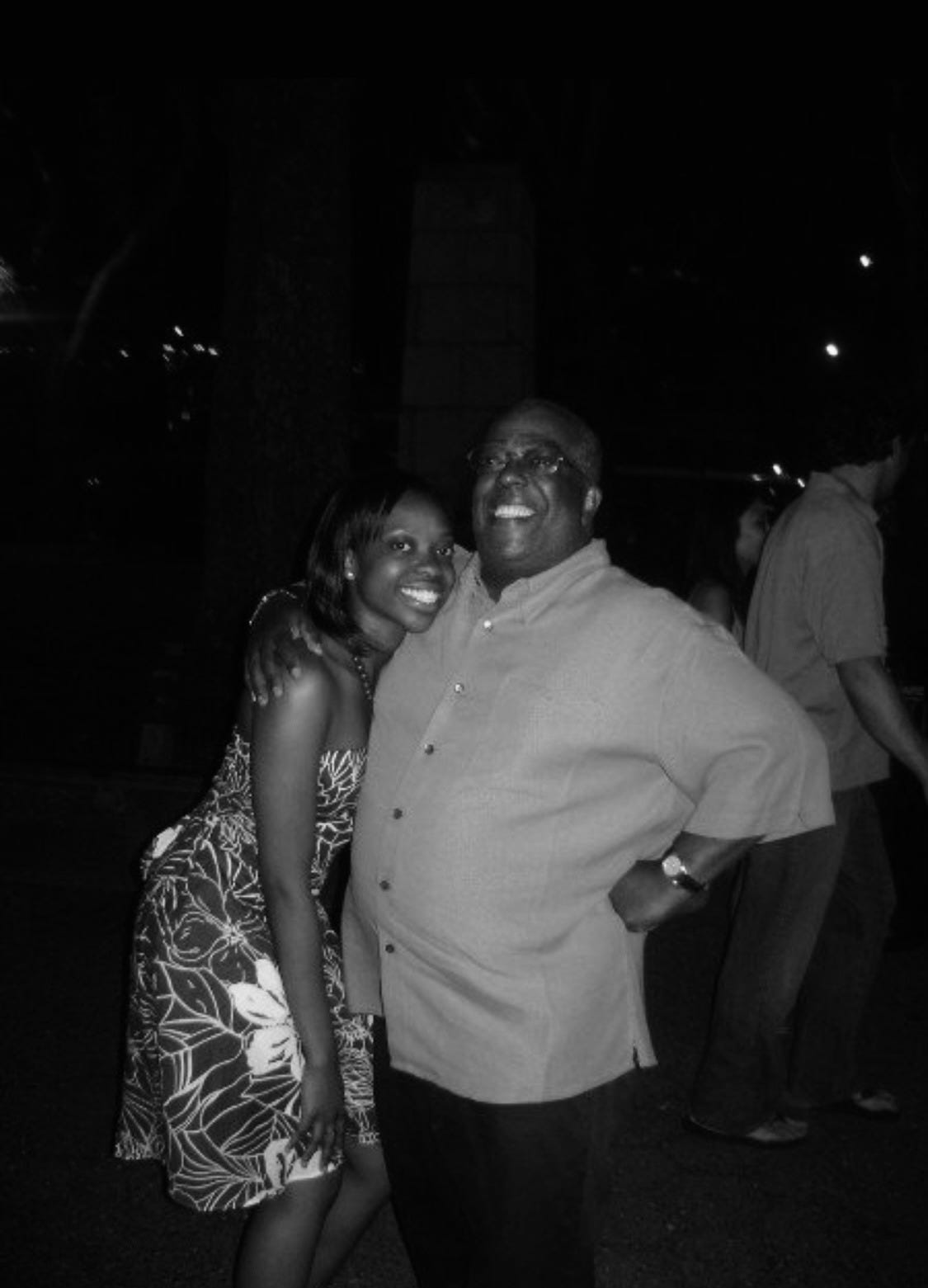
However, that level of care did not need to translate to all my other relationships; operating within them in the same way was costing me. The suppression of my own needs over the years, coupled with the grief I was carrying, was showing up in changes in my physical and mental health—exhaustion, digestive issues, and chronic stress that slowly morphed into uterine fibroids.
I needed to make a shift. I began to take stock of how I showed up in the relationships that deeply mattered to me and how I needed to define care moving forward in a way that was sustainable for me and pleasing to God.
My grief uncovered what survival had concealed all these years. Losing my father forced me to confront me. For most of my life, caregiving was the clearest form of how I showed my love and how I showed up, but it was never meant to become my whole identity.
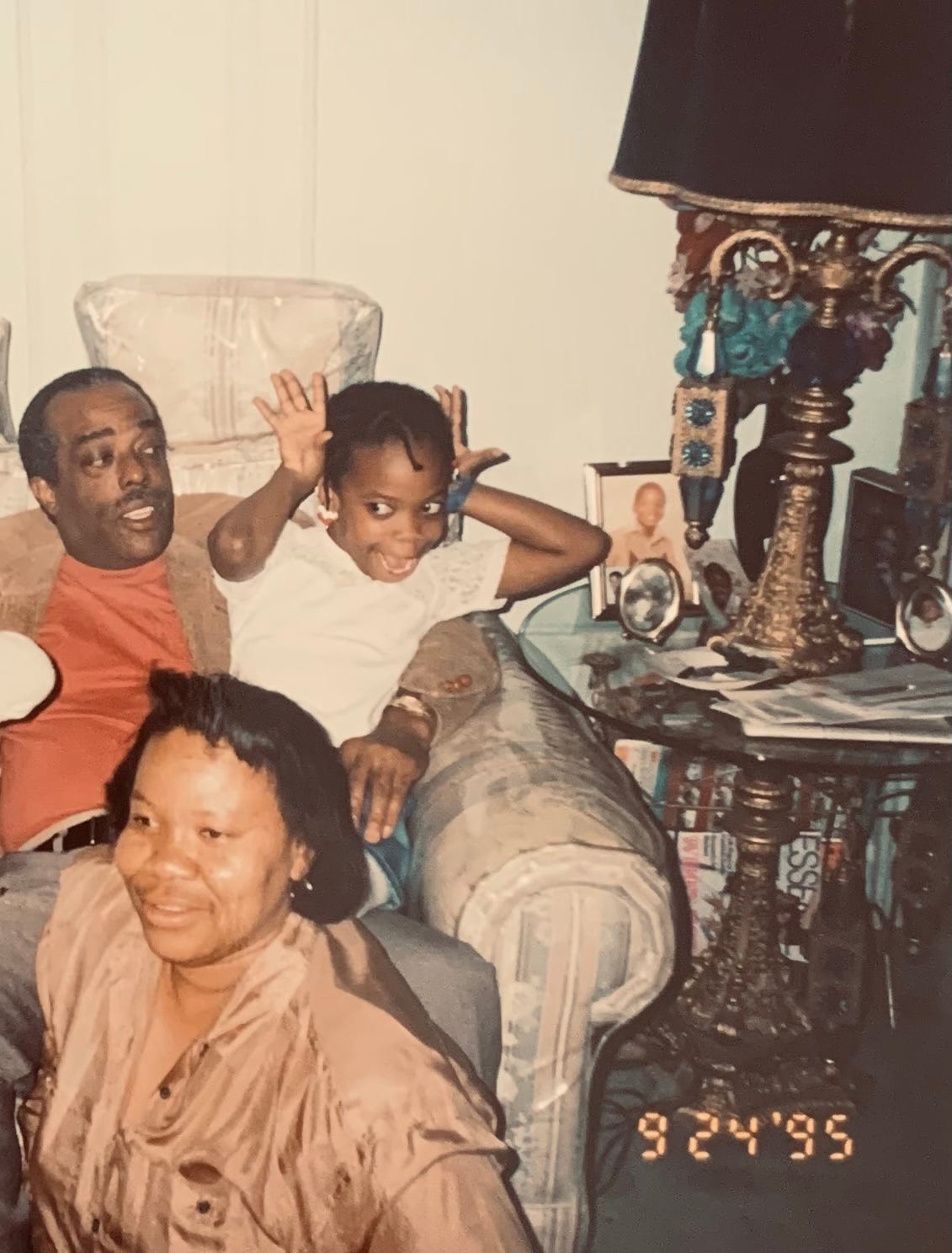
Lately, I’ve been thinking a lot about that nine-year-old version of myself that stood in the kitchen, trembling as I called my mom, watching my dad lose control of his body. I’ve been thinking about how much that moment shaped the younger version of me.
I have so much pride in how she jumped into action. But I also know how much she needed compassion and care, too. How much she needed a hug or to lean on someone else as they said, “I got this.”
And for me, that is what remains when caregiving ends: meeting myself beyond survival and beyond the anticipation of others’ needs. Beyond who I had become for everyone else, so that I can now better show up for myself.
Song of the week: Hymn Medley (feat. Chandler Moore) - Maverick City | TRIBL
Resources:
My Therapy Notebook: A therapy journal that gave me more language for my feelings.
Lock In - Pastor Sarah Jakes Roberts: We can focus so much on the spiritual that we neglect the physical. But God created us as complete beings, able to intuit when something is wrong and feel when it’s time to move forward. When you’re locked in with God, you can feel it in your body. Listen to that! Your body will tell you when to stop, let go, or keep going. If you’re holding something in that’s building anxiety or manifesting in sickness, God wants you to empty it. Pray that He helps you let go of what’s keeping you from walking in lockstep with Him.
Push Through - Sarah Jakes Roberts: God cannot comfort what you don’t confront.
Ephesians 6:2-3
 | A guest post by
|